
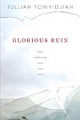
Glorious Ruin: How Suffering Sets You Free by Tullian Tchividjian

No one is exempt from suffering, whether physically, emotionally, or relationally. It matters not if a person is a Christian—everyone experiences suffering to some degree. No doubt suffering has been written about, studied, debated, and discussed for generations. Over time one may begin to wonder if there can possibly be anything new to say about it.  But Glorious Ruin: How Suffering Sets You Free by Tullian Tchividjian does exactly that. This may be one of the most important books a Christian could read in today’s publishing market. My view on suffering was challenged throughout this book, and by the end of it, I found myself deeply affected in a spiritually transforming way.

Glorious Ruin discusses at length two key issues: The Theology of Glory and the Theology of the Cross. Throughout the text Tchividjian explains the origins of both, as well as key differences between the two.

Glorious Ruin is brimming with powerful truth which provokes pause and careful contemplation in the reader. With brutal honesty, the belief system of the majority of modern Christians is challenged to go well beyond what is generally understood about suffering. Tchividjian also challenges the ideologies permeating from the Prosperity Gospel, Scientism, and Nihilism as well as skillfully working through the New Age “self-transformation” movement. He exposes the fallacy of Karma, and how most every Christian is tainted with the idea that “what goes around comes around”–whether they realize it or not.

“We communicate that God exists for our benefit, happiness, self-fulfillment, and personal transformation. Those aren’t necessarily bad things, and God isn’t necessarily opposed to them, but God in Christ cannot be reduced to a means to our selfish ends. He is the end Himself!” (pg. 47)

Christ cannot be reduced to a means to our selfish ends. He is the end Himself! <<<< Click to Tweet!

A tremendous amount of detail goes into studying the effects of moralizing and minimalizing suffering, namely within the Church community. We may think we are not guilty of such attitudes, but this book challenges thinking and promotes deep introspection on such issues. If we’re honest, we’ll admit we are at least tempted to rationalize suffering, or explain it, using the word of God. We tend to, at least subconsciously, feel the need to defend God’s allowance of certain tragedies. Glorious Ruin is not another book to offer reasons why a person suffers, it simply points to the Gospel repeatedly as not needing a defense or an explanation.

“The Gospel is not ultimately a defense from pain and suffering; rather, it is the message of God’s rescue through pain.” (pg. 38)

Unlike many Christian resources currently available, it’s clear Glorious Ruin was not written to promote a certain doctrine or theology, but focuses solely on the Gospel as it is written in the Bible, especially through the life and words of Jesus.

“What God pressed deeply into me is that there is no true, lasting hope outside of Him. Specifically, there is no true, lasting hope outside of the death and resurrection of Jesus Christ. I’m not talking about an explanation of what happened on Calvary—I’m talking about Calvary itself.” (pg. 150)

Perhaps one of the most poignant messages of the entire book deals with our inherent need to have things explained. Our natural tendencies are predisposed to asking the Why and How of our circumstances. The following quote hit home for me, personally.

“Explanations…are a substitute for trust, a red herring at best. God is interested in something much more powerful than anything information could ever produce. He is interested in faith.” (pg. 152)

I like to keep my personal “opinions” out of book reviews, keeping to the factual content of the book and letting the reader decide if its right for them, but this case proved impossible for me. I cannot withhold the deep impact this book had on my life and how the truth it contains applies to every living soul on the planet. If you think you know everything about suffering already, I plead with you to read this book. If you live a comfortable life, relatively free of what you consider suffering, I plead with you to read this book anyways—if not for yourself, for the people who walk in to your life who have suffered in ways you may not be able to relate to.

One thing you will not find in Glorious Ruin is an attempt to trivialize pain, or compare one person’s experience to another. Tchividjian rightly acknowledges that we all suffer in unique ways and God has a plan to set us free through that suffering, no matter what its form. Simply put, Glorious Ruin is a must-read Christian resource.

Glorious Ruin: How Suffering Sets You Free by Tullian Tchividjian is published through David C. Cook and is scheduled to be released on October 1, 2012.

(I received this book for review purposes only and was not required to give a positive review.)

Tullian Tchividjian is the Senior Pastor at Coral Ridge Presbyterian Church in Ft. Lauderdale, Florida. He is also the grandson of Billy and Ruth Graham. Tchividjian is a visiting professor of theology at Reformed Theological Seminary and has authored many books including Jesus + Nothing = Everything.

Pleasing God by R.C. Sproul

A war is raging within us, a deadly triad of enemies battling our spirit to keep us from pleasing God. We want to do what is right, but at the same time our deep self-rooted desires pull us away from what is pure, wholesome, and altogether pleasing to our Heavenly Father. Over time we may find ourselves discouraged and distraught over our inability to live as God called us to live. If this war rages on, ignored, we will never live up to our full potential honoring God through our lives.

Pleasing God by R.C. Sproul is a worthy spiritual resource for anyone who desires to align their life with the Word of God. Readers will walk away with a clear understanding of what is expected from those who would claim to be a Christian.

“True living flows out of right thinking…how we think about God is the most vital influence to how we respond to God.” (pg. 185)

What does right thinking look like? What does it mean to grieve the Holy Spirit? What enemies are at war within us? What evidence can we look for in our lives to show we are, indeed, pleasing God in all we do?

These questions are answered along with many more. Sproul also touches on various issues such as conversion, forgiveness, pride, integrity, laziness, carnal Christianity, doctrines of faith and many more key subjects. Simply stated, Pleasing God is an all-inclusive guide through the process of sanctification in the believer’s life.

Of considerable interest is Sproul’s extensive work on the subject of guilt scattered throughout the text. He discusses false guilt, guilt from sin, as well guilt that results in physical and psychological disease. Many people struggle with guilt, and anyone could benefit from the application of truth concerning guilt presented in this manuscript.

Pleasing God consistently points readers to the Word of God—knowing it as well as believing it. Without knowledge of the Bible, a person cannot understand how to please God.

“Consciousness involves knowledge. Before we can willfully do what God commands and what pleases Him, we must first understand what God requires. From the law comes a knowledge of sin (Rom. 3:20). But from the law also comes the knowledge of righteousness (Rom. 7:12; Psalm 119).” (pg. 186)

Pleasing God is not overly-complicated or lengthy. It masterfully presents truth in an easy-to-understand manner. Readers will walk away from this book with a renewed motivation to actively pursue God, put Him first, know His Word more, and persevere in pleasing God in every aspect of life.

Pleasing God is published by David C. Cook and available for purchase on September 1, 2012.

R.C. Sproul is the founder and chairman of Ligonier Ministries and serves as the senior minister at Saint Andrew’s, a Reformed congregation in Sanford, Florida.  Sproul has written dozens of books including The Prayer of the Lord, The Reformation Study Bible, Chosen by God, and The Truth of the Cross.

(I received this book for review purposes and was not required to give a good review.)

God’s Love by R.C.Sproul

Who can begin to comprehend the depths and wonders of God’s immeasurable love? R. C. Sproul attempts to shed light on what is arguably the most misunderstood of all God’s attributes–love.

“Whatever God’s Love is, it is not exhausted by our concept of it. It transcends our best efforts to describe it. It is higher than our loftiest notions of it.” (God’s Love, pg. 29)

God’s Love is a penetrating theological read which challenges the intellect on a variety of issues and seeks to answer key questions: What is love? Is a loving God also a wrathful God? How is God’s love displayed through redemption, adoption, and election?

R. C. Sproul devotes an exceptional amount of time interpreting the doctrine of election. Lengthy Scripture quotes are also extensive throughout the text, eliminating the need to stop reading, pick up a Bible and look up references for clarification.

Of particular interest is the detailed exposition of the “love chapter”, 1 Corinthians 13. A great deal of God’s Love unravels the depths of truth woven throughout this often misquoted and misunderstood passage of Scripture. Readers may find this portion of text to be uniquely beneficial.

God’s Love is not a book designed for quick reading, or a cursory glance at the attributes of God. God’s Love provokes deep thought on deep doctrines and may be difficult to understand for a new Christian, or one who has not studied much of the Bible.

God’s Love is published by David C. Cook and available for purchase September 1, 2012.

Dr. R. C. Sproul is the President of Reformation Bible College and the Founder and Chairman of Ligonier Ministries. He has authored over 80 books including The Holiness of God, Chosen by God, and The Truth of the Cross.

Breaking Up is Hard to Do…

“This is my prayer: that your love may abound more in knowledge and depth of insight, so that you may be able to discern what is best and may be pure and blameless until the day of Christ.” Philippians 1:9-10

Under the conviction of the Holy Spirit I recently made several dramatic changes to my lifestyle (1 Cor. 6:12-13, 19-20). I’ve found, through the implementation of these new habits, many “bad” habits came to light I was unaware of. As I mediated on such things I discovered three sources of influence over my choices:

#1-Parents

Some of the things I’ve done my whole life are a direct result of how I was raised (this is not a ding against my parents but merely a fact-see Proverbs 22:6). It’s extremely difficult to replace habits practiced for more than twenty years-but it can be done. The Holy Spirit has strengthened and enabled me to follow His will for my life today. (Phil. 4:13)

#2-Media

If I spend too much time reading/viewing secular media, I find it tempting to become overwhelmed with a wide variety of opinions (Rom. 12:1-2).  One week something is bad for you and the next week that same thing is good for you. If I choose to believe everything I read without seeking the will of God through His word and prayer, I will be on a constant roller-coaster of frustration.

#3-Christians

Many well-meaning Christians have a variety of opinions based on their interpretation of Scripture and their own experiences in life (often relating to how they were raised-something we all do). More often than not, I have experienced a great deal of criticism within Christianity regarding lifestyle choices, especially anything that contradicts what someone else is doing. Everyone has an opinion, interpretation, and a judgment. (Matt. 7:1-5) The only way I can really know what is best for me is to spend time in the word and prayer. (Phil. 4:6-7)

This isn’t the first time I’ve received negative feedback regarding a personal choice, but I do believe I am following God’s will for my life (recognizing this is not His specific calling for every believer). I’ve done research and made, what I believe to be, an informed decision based on that research and my relationship with God. I am the one who will answer for my choices; it is imperative I do whatever it takes to maintain a clear conscience before God. (James 4:17)

I’m now questioning every choice I make under this light: is it God’s word and Spirit guiding me or the habits and opinions of others?

Grasping Straws

Suggested Reading: Psalm 131

“I don’t concern myself with matters too great or too awesome for me to grasp. Instead, I have calmed and quieted myself.” Psalm 131:1-2 (NLT)

I enjoy surfing the web discovering other writers with a passion for Jesus; I find this both rewarding and daunting. I often come across unique and well-written blogs causing me to take pause on my own abilities. Maybe this is how the Lord keeps me humble.

One particular blogger writes about deep theological issues, and he writes them in such a clear, easy to understand manner. I enjoy his writings immensely (and you may as well, so I included the link to his site), but at the same time I have been tempted to run off on rabbit trails researching issues I may never understand. (Predestination, election, the trinity, soteriology…what I can understand continues to blow my mind.) This morning as I listened to Bible on audio I was struck by Psalm 131.

David starts with, “Lord, my heart is not too proud; my eyes are not haughty,” and my spiritual light-bulb goes on. True humility comes with understanding my own calling, and walking in it with confidence, rather than pursuing what I haven’t been given a mind for.

God has not called me to be a seminary grad (at this point), nor has He called me to try in my feeble attempts to understand the deepest mysteries of doctrine. He has only called me to draw on his word and apply it to my life, sharing how marvelously freeing his truth can be for the soul who believes and lives it. This is how my soul is quieted and finds peace; knowing who I am, what my purpose is, and not straying from that path.

Some are theologians, preachers, or missionaries, and some are just regular folks like me, redeemed sinners rescued from a pit of hopeless despair and called to live the liberating life of Jesus.