How Food Paves the Path to Forgiveness and Faith

**Originally published in The Christian Online Magazine, December 2012 Issue**

Food is more than a tasty treat, a temptation for over-indulgence, or an excuse to spend obscene amounts of money at fancy restaurants. No, food has a much greater significance. Food is a ministry—at least it can be. The following article highlights just a few examples from the Bible concerning food and its significance in our lives beyond tickling the taste-buds.

Food for Forgiveness

     Passage: Genesis 41-45

In the midst of a seven year famine, God paved the way for a divine appointment of familial restoration. Joseph’s brothers were forced to travel to Egypt to save the lives of their family by purchasing food from the Egyptian storehouses. Of course, they had no idea their brother Joseph, who they sold into slavery over a decade prior, would be the one standing between them and their hungry tummies.

In what is probably one of the most famous stories of the Old Testament, we see that Joseph chose to extend forgiveness to his wicked brothers (after first giving them the scare of their lives) instead of retaliating in anger. They came to him helpless and hungry, and through the use of food, God ushered in one of the most famous verses used by millions of Christians throughout generations:

“You intended to harm me, but God intended it for good, to accomplish what is now being done.” Genesis 50:20

God used a famine, a store-house full of grains, and some hungry men to bring forgiveness and healing to many wounded hearts. The food was the vehicle, but the deeper purpose was restoration. We need to look at our lives and see if there is unrelenting bitterness, anger, or resentment either in our hearts or the hearts of our loved ones. We are fast approaching Christmas but how many families will remain divided because of unresolved hurts? Maybe we are the vehicle God wants to use to bring the family back together. Ultimately we are only responsible for our own attitudes, but we can “set the table” for the rest of our loved ones to give that thing called “forgiveness” a try. Perhaps a holiday meal would be the perfect time for such an act of peace.

• Food for Faith

     Passage: Matthew 14:13-21

Jesus had just been told the news: John the Baptist, his cousin and beloved friend, had been killed. At a time when most of us, in the light of such news, would have curled up in the fetal position and checked out of life for a while, Jesus was afforded no such luxury. Instead, he was followed by mobs of people anxiously awaiting His every move—would he heal again? What would He say next? No one wanted to miss a thing!

The disciples urged Jesus to force the crowds to leave; besides, it was late and the people were probably hungry—they should just leave Jesus alone and let Him grieve. But what was Jesus’ response? He chose to sacrifice his own comfort and focus on the needs of the people. They were hungry—he fed them. In fact, he fed five thousand of them!

When we are met with difficulty and pain, we tend to turn our focus inward and withdraw from companionship. But in that pain we are offered an opportunity to reach out and help someone else. And yes, we can do that with food. Someone out there is hungry; someone out there has a need. Perhaps God wants to use our pain, not to feel sorry for ourselves, but to reach out and touch someone else with the generous spirit of giving our Lord demonstrated for us.

So as another year comes to a close and we gather at tables full of buttered biscuits, pumpkin pies, carved hams, and candied yams, let’s purpose to reflect a spirit of love, forgiveness, and selfless service to the world around us.

“In a word, what I’m saying is, grow up. You’re kingdom subjects. Now live like it. Live out your God-created identity. Live generously and graciously toward others, the way God lives toward you.” Matthew 5:48 (MSG)

__________________________________________________________

profilepic3Rebecca Aarup is a health columnist for The Christian Online Magazine, a contributing writer for Encourage 365, founder and creater of S.E.R.V.A.N.T. Sisters, and has written devotionals/studies/articles for a variety of other publications. She just released her latest Bible Study The Word: Six Lessons from Psalm 119 which is available as a free download on her website or in print form from Amazon. Beyond writing, Rebecca is a wife, home-schooling mom, and Bible student at Liberty University. She lives in Glendale, Az with her husband Chris and 5 year old, Samantha.  You can read more from Rebecca by following this blog and following her on twitter and facebook.

The Worst Illness a Christian Could Get….

It’s one of the worst illnesses a Christian could get. Evidence of this cruel disease has popped up everywhere over the past several decades. No doubt, it has infected more believers now than ever before. Perhaps you have already contracted this disease without even knowing it. The symptoms are silent and deadly, spreading through thoughts and rationales. And how am I qualified to speak on such an illness? What gives me the right to draw attention to its ravages amongst the bride of Christ? Well, as the saying goes, “It takes one to know one.” I, too, have been infected with this deadly virus.

Where it all began…

Recently my husband, daughter, and I went to a favorite restaurant. We were quickly seated at the table where we proceeded to browse the tempting appetizers, entrees, and deserts colorfully displayed throughout the menu. Our mouths watered with anticipation. As the waitress approached I smiled as I usually do, getting ready to show my best Christian politeness while ordering. But the waitress kept on walking. She hadn’t even looked at me. A little disappointed I reasoned, “She probably has another table that was seated before us. No biggy.” But over the next fifteen minutes servers walked by our table, nary a one looking us in the eyes. My husband was irritated as my five-year-old grew increasingly hungry and restless.

“I think they’ve got ‘Somebody-Else Syndrome,’” I told my husband.

“What?” He asked looking confused.

“Every single one of them seems to think ‘somebody else’ will take care of us. And because they all have that mindset no one ends up helping.”

Eventually I went to the hostess at the front of the restaurant and explained our plight. It was still another five minutes before a server came to our table. As annoying as that situation was, God used it to speak to my heart.

So, what now?

I have no idea if any of those servers were Christians or not. It doesn’t really matter because the principle lies within the thought process. It goes something like this: the preacher brings attention to a need within the church and you nod, even pray about. “Lord, please meet this need. Please bring the right person along to help.”

Of course, there is nothing inherently wrong with such a prayer, but it fails to really address the issue. Whether consciously or not, it has an underlying tone of, “Lord, let someone else take care of this, because you know I can’t do it.” Obviously there are legitimate needs that cannot be met by every individual. I know when my pastor shows slides of the orphanage our church funds in India that I cannot fly there and personally get hands on. I understand these things. So, before you post an angry comment, this is not about giving people a guilt trip. As I said before, I too have prayed such prayers and thought such thoughts.

But what would happen if we prayed, “Lord, what can I do to meet this need?” You see, such a prayer puts the ball in our court, and that makes us uncomfortable. Because the reality is, in most circumstances there is something we can do.

Here are some of the excuses I have used to rationalize away any personal responsibility in helping others in a hands-on way.

“I don’t have enough money. God wants me to get out of debt first before I donate financially.”

In this day’s economy, I have a feeling I am not the only one who has used this excuse. It’s tantamount to saying I need to stay at home and study the entire Bible inside and out before I go in to the world and share my faith or serve in the church or surrounding community. It’s a clever ruse tempting to keep us in the stagnant waters of selfishness.

“I don’t have enough room, I don’t have enough resources. I don’t have enough time.”

Once again I refer to the above explanation. If we wait until we are “ready”, until we have enough, are enough, or own enough, then we will never—I repeat—never make a tangible move forward because we will never be “ready”. There will always be more bills to pay, more books to read, more personal “needs” to gain. I am convinced this is one of the single greatest deceptions among believers and it has immobilized the church. While some are willing to write checks, few are willing to get their own hands dirty. Like I said, I have been there too.

If all of us sitting in the pews on Sunday are infected with Somebody-Else Syndrome, the needs of our communities, even the needs of our brothers and sisters, will never be met. And what a shame that is. Indeed, I know many unbelievers who are far more generous with their time and resources than Christians. And this becomes a roadblock for them. After all, why should they believe in God when the people who say they follow God are so self-absorbed and inward focused?  If that is what God is all about, just judging, pointing fingers at sins, and not actually doing anything else, then what is the point?

Service not Serve-us…

A couple of weeks ago my pastor used this phrase, “service instead of serve-us”. How true is this, though? If we had a mindset of “what can I do, Lord” instead of, “Lord, let somebody else step up” more needs would be met.

If it sounds like I’m worked up, I am. I write this with high emotions as I watch a friend in need being turned away. Too many Christians infected with Somebody-Else Syndrome. Initially, when I heard of her need, I prayed, “Lord, please meet her need.” You know what He said? He said, “You can meet this need.”

He reminded me of a verse I had recently posted on facebook and twitter:

“I want you to share your food with the hungry and bring right into your own homes those who are helpless, poor, and destitute.” Is. 58:7

“But Lord, you know this type of situation has turned out badly in the past. You know our circumstances, finances…blah blah blah.” It was clear what God required. I was given an opportunity to practice what I preach, to get my hands dirty; to sacrifice comfort and resources. And I admit, I hesitated. But I am glad that after a few minutes of spiritual wrestling I submitted.

But here we are again. The same friend in the same situation and I am left wondering, “If this person was a missionary or speaker, or someone famous, the same people who say they cannot help would be willingly opening their doors.” Maybe that is too cynical, but it’s what I am left with after weeks of watching my friend struggle.

Once again I know what God requires of me, and I am willing now because I have seen the blessings and spiritual rewards for following His voice. But I am still reeling over the occurrences of Somebody-Else Syndrome that has infected many believers today.

Who is willing to sacrifice comfort, time, and resources to meet the needs around them? Who is willing to take a dose of God’s word, God’s truth, and eradicate this disease lurking within? Who is willing to serve Him by serving others instead of serving self? It’s time we rise up and get uncomfortable. Our brothers and sisters are hurting and are being rejected by their own spiritual families. This ought not be! It’s time we say “Lord, I want to share my food with the hungry and bring right into my own homes those who are helpless, poor, and destitute.”

“First-World” Problems

**Published on Encourage 365, November 2012**

On Sunday my Pastor showed a riveting video called “First World Problems Rap” and the irony of this video should be evident to any viewer.  I appreciate the message and encourage you to watch it (it’s only two minutes).


(Here’s where you click the link to watch the video before reading on…)


So, yesterday our church launched a 30-day challenge to start a “First World Problems” complaint jar. You guessed it, every time we catch ourselves complaining about a “problem”–much like what is depicted in the video–we have to drop some money into the jar. At the end of the 30 days we turn in our jars to the church benevolence fund so the money can be used to help others. Immediately I knew I needed to participate (and I hope you’re challenged to do the same—donating the money to your church or charity).


Making a “complaint” jar is a great idea and something I hope to continue beyond the 30 days. Even in one day both I and my daughter have begun to realize how much we gripe about trivial things. Let’s face it, waiting in line at Starbucks really pales in comparison to the trials most children face in third world countries. I am ashamed to even admit how often I forget to pray for those children. Most of us will never get the opportunity to travel to a destitute country and personally help, but most of us do have the capability of helping out through active service in our communities.


The church I attend has several outreach groups that work with homeless people, foster children, disabled children, hungry families, and more. Even if your church does not offer these things, there is something somewhere that you could probably get involved in. Even if it’s just dropping off canned foods for a food drive or hygiene supplies to homeless communities. The needs are there, we just need to open our eyes and look (and pray) for opportunities.


All of our situations are unique. My situation requires me to be home much of the time. I’m a wife, I home-school my daughter, I’m a full time student, and a freelance writer. I am in my home a lot! But a few months ago I prayed for God to show me what I could do to get “hands-on” and He was faithful to immediately answer that prayer! Sometimes we are fooled in to thinking we don’t have the time or resources to make a difference when the reality couldn’t be further from the truth. We may never know what impact our small acts of kindness could have on another life.


So my challenge to you is the same challenge my Pastor shared with the congregation. Make a complaint jar and keep track of just how often you complain about “first world” problems. The results will probably be shocking. Remember, the point is to change our perspective. Faith is supposed to be active. Jesus didn’t just sit in the synagogue all day and preach. He was out there demonstrating a hands-on faith, as were the disciples. And we’re all familiar with James 1:27, “Religion that God our Father accepts as pure and faultless is this; to look after the orphans and the widows in their distress and to keep oneself faultless from the world.”This is the kind of faith I want to demonstrate to the world; this is the kind of faith I ask God to create in my life.


A faith that moves.


“And let us consider how we may spur one another on toward love and good deeds.” Hebrews 10:24

(Also see related article: Let’s Do Justice from Prodigal Magazine)

Spiritual Reboot: Four Ways Fasting Benefits your Body and Spirit

**Published with The Christian Online Magazine, November 2012**

Spiritual Reboot: Four Ways Fasting Benefits Your Body and Spirit

A lot of controversy surrounds fasting; a quick Google search reveals doctors who wholeheartedly support it and others who are adamantly against it. As Christians, we need to look to Jesus and what His word says when it comes to these issues. In the book of Matthew (4:1-2) Jesus was led by the Spirit to fast, and later He outlines some simple fasting guidelines (6:16-18). So, fasting was not only practiced by Jesus but also taught by Him.

Fasting Benefits Your Physical Body

  • Reboot your “system” with a cleansing fast.

During the first 12-24 hours of a water-only fast, your body begins to break down glucose stored in your liver and muscles, converting it to glycogen to use as energy. After this energy has been depleted, the body begins to use fatty acids for energy. As the fast progresses past two days, the brain uses glycerol (a product of fat tissue) and amino acids from broken down muscle tissue as energy sources.

“Since the bulk of the toxins in your body are stored in your fat reserves, the longer you fast on water only, the more fat you’ll burn and the more toxins you’ll eliminate from your system.” Dr. Ben Kim

Simply stated, fasting for a few days helps the body get a fresh start as harmful chemicals from processed foods and other materials are removed from the body. Some medical studies have even indicated that a fast may help boost the immune system.

  • Put an end to bad eating habits.

Recently I began a ten-day fast and initially I felt freed from the burden of food. I knew, at least for several days, that cooking and wondering about meals would be eliminated from my daily routine. (Don’t worry– I still cooked for my family!)The first day was great—then the second day hit. I would be lying if I said it was easy, because it wasn’t. But what I did come to realize was just how often I was putting food/drinks in my mouth. As the days progressed I eventually felt very little hunger. After the ten days was over, I realized I needed very little—far less than what I had been consuming—to be satisfied and supplied with energy. Now that I’ve come through the fast and am still very much alive and well, I not only feel better physically, but several bad eating habits were effectively broken. (Anybody else have a problem with late-night snacking?) Of course, the spiritual benefits far out-weighed the physical.

Fasting Benefits Your Spiritual Life

  • Obeying the Word of God provides inner peace and contentment.

Those who follow God’s words are blessed, full of joy and peace, and satisfied (Psalm 1; 119; Proverbs 3:1-8). Obeying God through fasting is no exception—it is yet another way we can place our dependence on Christ and get our eyes focused on Him instead of what we think we need. Spiritual eyes are opened during a time of fasting and prayer and when we choose to eat and drink of the Word we are truly blessed in our spirit.

  • Fasting and prayer encourages spiritual awakening and the breaking of sinful habits.

Joel 1:14, 2:12; Nehemiah 1:4, 9:1-3; Ezra 8:23; Acts 14:23; Esther 4:3; Deuteronomy 9:9; 2 Chronicles 1:3; Daniel 9:3–all of these Scriptures reference fasting by God’s people for repentance, direction, instruction, or intervention. Both the Old and New Testaments are full of examples of fasting believers. I hope you’ll take the time to browse the passages listed and see how many ways God chooses to work through fasting.

With only a few days remaining until a critical presidential election, perhaps now is the time to consider fasting for personal and national revival as well as godly leadership in our nation. Or maybe you are struggling with a sinful habit. In any case, seek God first and follow His voice—He is the only one really qualified to lead you in this area.

As always, consult your doctor to make sure it is physically safe for you to fast (but do be prepared to meet mixed opinions from medical professionals on this topic).

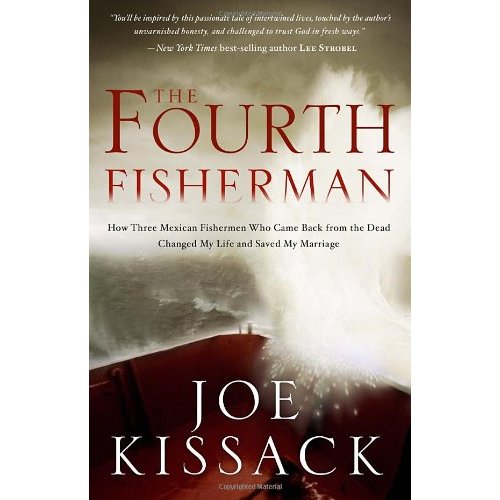
The Fourth Fisherman by Joe Kissack

The Fourth Fisherman by Joe Kissack is the true story of three Mexican fishermen lost at sea for more than nine months. The fishermen were believed to be dead, but in a shocking turn of events, a Chinese fishing crew happened upon them near the coast of Australia, where they had drifted more than 5,500 miles across the Pacific Ocean.

Woven within this amazing story of survival is another “survivor” tale. The story of Joe Kissack, successful TV media mogul, tells of a man so wrapped up in his own success and wealth he finds himself lost in his own personal sea of misery. Enveloped in addiction and depression, Joe finally hit rock bottom. It was there that he found salvation and recovery in the person of Jesus Christ.

The Fourth Fisherman is a compelling tale of an incredible, almost unbelievable, story of survival and hope. Not just for the fisherman, but for Joe—the “fourth” fisherman. Eventually Joe and the fishermen meet face to face where their stories finally converge. Joe fights for several years to make sure the fishermen’s story of faith is appropriately represented in the media. He finds, however, that the majority of Hollywood is only interested in the gruesome, and often completely inaccurate, details of the fishermen’s story. A story—the true story—of faith which led these men to persevere is nowhere on the media’s radar.

This in an amazing book, and truthfully once I started it I could not put it down. Not only is the tale of survival amazing, but also how God worked out the intricate details to allow the lives of Joe and the fishermen to cross, enabling the story of their faith and perseverance to be told. This book reads a lot like a novel and there is not one dull moment to be found in its pages. Joe is honest about his struggles too, which I especially appreciated. I can’t think of a single person who would not be blessed and encouraged through the reading of this story.

The Fourth Fisherman by Joe Kissack was published by Waterbrook Press in March 2012 and is currently available for purchase.

(I received this book from Waterbrook Multnomah in exchange for my honest review. I was not required to give a positive review and the opinions expressed here are strictly my own.)

Positive Life Principles for Women by Karol Ladd

Karol Ladd, bestselling author of over 25 books, will be releasing her latest work, Positive Life Principles for Women, in February 2013. Positive Life Principles for Women is short, sweet, and easy to read, but by no means is shallow. Quite the contrary, actually, this book is full of convicting spiritual truth. If you have lived a less-than-perfect life wondering how or what God could possibly do with your spiritual ugliness, then you will find great encouragement in this book.

Positive Life Principles is unique in many ways. Each chapter includes a section titled: Powerful Truth, Plan of Action, Pay it Forward, Place it in Your Heart, and Discussion Starters.  Powerful Truth is just that, a powerful one sentence take-away from the text covered. Plan of Action outlines several easy steps to put what the reader learns into visible action. Pay It Forward describes simple suggestions to reach out and touch someone else’s life and get the focus off of self. Place it in Your Heart provides a suggested verse for memorization, to further aid the reader in internalizing and living out spiritual truths. Discussion Starters includes a few thought-provoking questions at the end of each chapter perfect for group study or even individual use.

Within the text, Ladd addresses several key issues in many women’s lives; negative thinking, dealing with fear, being flexible, being an encourager (versus a discourager), and much more. Overall this book far exceeded my expectations. I have read many books addressing these issues, but Ladd approaches them in a new, creative way. My eyes were opened to personal areas of needed spiritual improvement, without making me feel like a reject or a failure. In fact, the only negative thing I can say about it is that it wasn’t long enough (the book is only 120 pages).

If you’re a Christian woman (perfect or not), or if you know one, this book is a must read. I have no doubt it will be used in many churches as a group study once it is released.

You can read more about Karol Ladd, her books and her ministry, at http://www.Positive LifePrinciples.com. Her newest book, Positive Life Principles for Women will be released on February 1, 2013.

(I received Positive Life Principles for Women by Karol Ladd from Harvest House Publishers for review purposes only. I was not required to give a positive review and the opinions expressed here are strictly my own.)

1000 Days: The Ministry of Christ by Jonathan Falwell

Jonathan Falwell, vice chancellor for spiritual affairs at Liberty University and senior pastor at Thomas Road Baptist Church, has written a detailed account of the life of Jesus during His earthly ministry in 1000 Days: The Ministry of Christ. Falwell does an extraordinary job chronicling the life of Jesus in an interesting, thought-provoking way. But this book isn’t just a list of activities; it delves the depths of Christ’s motivations, feelings, and experiences walking this earth in human flesh. The reader is not only informed, but challenged to apply spiritual truths to their own lives—to adopt the mission of Christ as their own.

“Jesus did not promise us a life free of trouble. He is called the God of all comfort—and if there were no troubles, He would not need to be called by this name. Jesus does not promise freedom from all problems, but He does promise that we will never face situations alone.” –1000 Days: The Ministry of Christ by Jonathan Falwell (pp. 9-10)

1000 Days addresses not only the ministry of Christ but the impact His ministry has for every person claiming to be a Christ-follower, both past and present. The text carefully walks through Jesus’ mission along with His expectations of those who follow Him. I particularly appreciated chapter four which walks through the first several verses of the Sermon on the Mount. He answers some important questions regarding this passage like what do the “beatitudes” really mean for you and me, and how did Jesus display them in His life? This chapter alone merits the purchase of this book and is something I will be referring to many times over.

Falwell also addresses the subjects of hypocrisy among believers, the doctrine of hell, dealing with temptation, authentic worship, pure motives, and what it really means to be a “Christian”.

“What does He mean that apart from Him we can do nothing? Jesus was not talking about what you and I can accomplish on a daily basis, what tasks to perform, what skills we can exercise, or how fast we can tick off our to-do lists, He was saying that we will accomplish nothing of eternal value unless what we do is based on the resources God gives. Without the life of Jesus flowing through us, our accomplishments don’t amount to a hill of beans.” (pg. 150)

Overall it is a phenomenal read and I highly recommend it. 1000 Days left me encouraged, motivated, inspired, and challenged to know and reflect the life of Christ more. Questions are also included at the end of each chapter for personal or small group study.

(I received 1000 Days: The Ministry of Christ by Jonathan Falwell from BookSneeze in exchange for my honest review. I was not required to give positive feedback and every opinion expressed here is my own.)

To purchase 1000 Days: The Ministry of Christ Click HERE.

Happy Accidents–A Lesson from Bob Ross

While most kids my age were watching the Simpsons and the Rugrats, as a young child I marveled at the skill of Bob Ross, a Christian painter who had a “how-to” painting program on PBS. I can’t imagine kids these days sitting around watching that type of show, but it was something I found inspiring.

He would take these globs of paint and turn them into glorious masterpieces of art. My favorites were always the oceans. The way he painted the waves, the shades of blue-green, the way he made the painting appear to glimmer—it was magnificent.

But more than all of those things I remember something he said while teaching the viewer how to paint. He said, “There are no mistakes, only happy accidents.” Sometimes he would purposely throw a stray mark in the midst of the beautiful picture only to prove his point. Skillfully working around it, blending it, and adding new colors he made it appear as though it was done on purpose.

Yesterday was a “Bob Ross” moment for me. A few weeks ago my digital camera took its last picture. Since then I had been using my phone to take pictures, but the quality was not the same. Knowing we were about to take a trip to Disneyland (we’re leaving tomorrow!) I was concerned about cataloguing the memories in my usual way—photos. My husband reminded me that we had an HD video camera which could also take pictures. So, I decided to figure out how it works and see if the pictures would be “acceptable”.

I took my daughter to AWANA and it happened to be a beautifully scenic evening with storm clouds glowing in the setting sun. I used the opportunity to snap some photos and quickly realized the quality of this HD camera was far superior to what I thought I had in my now broken digital camera. And then that phrase popped into my mind from nearly two decades ago, “There are no mistakes, only happy accidents.”

In that moment I was overwhelmed by the goodness of God. What I understood to be an inconvenience was actually a blessing. If my digital camera had not broken a few weeks prior, I would not have had the foresight to try the HD camera, and would have missed out on a glorious photo shoot—a divine photo shoot. Few things please the photographer in me more than an awesome sunset or scenic sky picture and those of my friends on Facebook will attest to that fact. But I have never had the privilege of capturing God’s beauty as I did last night. I have no words to express it. Every time I look at those photos I am in awe of my Savior. He planned that moment and in His great generosity He encompassed me with extraordinary feelings of wonder and worship.

Truly God plans all of our lives in such a way. There are no mistakes—even when we deliberately stray the canvas of our lives with ugly strokes of paint. The Master Painter simply takes His paintbrush and makes our mess beautiful. Beauty from ashes; this is the story of the redeemed. This is my story, my painting, and I am so grateful He takes the brush and continues to daily paint my picture with His infinite wisdom and care.

Lord Jesus, on my knees I confess my doubt, worry, anxiety, and disappointment—my unbelief. Help my unbelief and increase my faith ever more!

A Little Inspiration from Isaiah

“Don’t fear anything except the Lord of the armies of Heaven! If you

fear Him, you need fear nothing else.”

Isaiah 8:13


“See, God has come to save me! I will trust and not be afraid, for the

Lord is my strength and song; He is my salvation. Oh the JOY of

drinking deeply from the Fountain of Salvation!”

Isaiah 12:2-3

“But the Lord of Hosts is exalted above all, for He alone is holy, just,

and good.”

Isaiah 5:16

Egg-White Fury

Suggested Reading: Job 6:1-10

“This, at least, gives me comfort despite all the pain-that I have not denied the words of the Holy God.” Job 6:10 (The Living Bible)


The more things pile up the easier it is to react poorly in an insignificant situation. When my bank account is empty, my loved one is sick and the doors I wanted to go through have been slammed in my face-all at the same time-I get cranky. All of a sudden I’m irritated when my cats look at me funny.

The casualty of this inner war is unfortunate to be at the wrong place at the wrong time and receives the blunt force trauma of my egg-white fury.

I think of all the times I snap at my spouse (poor guy), curse at a jar I can’t open, or fly into a rage over a glass of spilled water. These are gross over-reactions to minor inconveniences. And through the lens of Job I see what went wrong. I allowed the greater surrounding circumstances in my life to dictate my behavior in the smaller situations.

So what do I take away from Job’s gag reflex? As much as he complained, as distraught as he was, as horrific his circumstances were, he was still able to say he did not deny the words of God. He remained faithful to his convictions despite insurmountable opposition.

I’d like to be able to say the same thing. I’d like to be able to experience difficulty without needing to release my anger on other people. I’d like to say the worst reaction I ever had was gagging over an egg-white. I’m not there yet, but God hasn’t given up on me.