Stuck: How to Mend and Move on From Broken Relationships

Final_STUCK_cover_2Stuck: How to Mend and Move on From Broken Relationships by F. Remy Diederich can be summed up in one word–brilliant. As a recovering addict, I have been through every step program and healing book out there, from Celebrate Recovery to the Alcoholics Anonymous Big Book. I have read books on anger and forgiveness written by famous theologians and pastors of mega churches, and though they have been helpful in their own right, this particular one hit home for me like no other has.

Before I read Stuck, I would not have characterized myself as a bitter or angry person. No, having been through the twelve steps every which way from Sunday, I would have said that I had NO problem with anger or forgiveness. And then I read the first few pages of Stuck and my heart sank (in a good, convicting way). Within approximately ten minutes of posting a Facebook status that said, “Frustrated” I read in Stuck what being “frustrated” really means, and as I honestly examined my heart I had to agree with the author’s conclusions on the issue.

Another aspect of Stuck I thoroughly enjoyed was the thought-provoking questions included in each chapter. I have a tendency to read books quickly, like what I read and even be convicted by it, but then forget everything the next day without any tangible life-changes. But in Stuck, the carefully chosen questions popped up everywhere (in a good way) which challenged me to think about what I had just read. In essence, the ball was in my court and I had the opportunity to either make a conscious change or ignore what I read and move on.

Whether you think you’ve conquered forgiveness, anger, bitterness, and broken relationships or not, this book is a must read. I guarantee you will be challenged to look within yourself, examine your motives, and make a lasting heart-change.

Initially I was interested in this book because of a personal situation I had been dealing with (in other words, a bad relationship) for the last year. This situation had become what I considered to be “impossible”. The truth presented in Stuck helped me discern what move to make next in regards to this relationship while having the confidence to know my decision would honor God. I believe in divine appointments; that there are no “accidents”. When Stuck landed in my hands (through circumstances only God could have orchestrated) my spiritual life began to transform in ways I didn’t even realize needed transforming. Perhaps when we reach a point where we think we’ve got it all figured out in a particular area is when we truly need help the most, having been blinded to our own short-comings

I can’t really rave enough about this book, and would strongly urge you to pick it up. It will be well worth your time and resources, especially if you actually apply what you learn. As I mentioned before, this opinion comes from one who has walked the road to recovery, and read many books on anger and forgiveness out there.

I look forward to getting my hands on a hard-copy of this book, as well as using it in a life-group (or small group) setting. I plan on reading it again and keeping it handy when those old familiar “feelings” resurface.

You can purchase Stuck: How to Mend and Move on From Broken Relationships by F. Remy Diederich on Amazon by clicking here…but for an even better deal check out this post by the author (if you’re reading this before December 18, 2012).

RemyF. Remy Diederich is the author of Healing the Hurts of Your Past…a guide to overcoming the pain of shame and STUCK…how to mend and move on from broken relationships. He is the founding pastor of Cedarbrook Church in Wisconsin, the spirituality consultant at Arbor Place Treatment Center, and offers retreats and seminars based on his two books.His books are available on Amazon.com, Barnes & Noble
Cross Point Publishing. (Stuck will be released in stores on Tuesday, December 18, 2012)
I encourage you to follow Remy on Facebook or Twitter and follow his blog: http://readingremy.com
You can also email Remy at: remydiederich@yahoo.com

(I received a free copy of Stuck for review purposes only. I was not required to give anything other than an honest review, and the opinions I have expressed here have been heartfelt and sincere. I do not know the author personally, nor am I a friend or relative. I am simply a grateful reader who was privileged to come across such and amazing book.)


Even the Pomegranates Cry Out

Chop. Chop. Chop.

I seem to have the best God-moments when I’m feverishly hacking away on a helpless piece of food, trying to work out my anger. It has come to be a habit. We fight—I cook. It’s how I wrestle with my emotions, think, pray, and take several deep breaths while annihilating a target other than my spouse.

“Ok, God, I know what you said in 1 Corinthians 10:13, I’ll never forget that verse…but, I’m starting to think You enjoy taking me to the edge of what I can handle.”

Chop. Chop. Chop.

Silence.

“Ok, You’re not talking. That’s ok, I have plenty to say…”

If God could get frustrated, I am sure I’d be His number one cause of irritation. “Oh, here’s Rebecca again, whining like it’s the end of the world. If only she knew how bad it could really be, maybe then she’d be grateful.”

Of course, I know God isn’t really thinking that towards me, in fact, what He is thinking about me is too mind blowing to comprehend. For example, “You did not choose me, but I chose you and appointed you to go and bear fruit—the fruit that will last.” (John 15:16)

Oh, and speaking of fruit? Yeah, I was carving up several pieces of fruit to make a fresh fruit salad while conversing with God in a less-than-humble way.  He never spoke to me in those heated moments, not audibly at least. But He did find a way to cut through my incessant ramblings of self-pity.

I don’t know about you, but I enjoy seeing God in nature—all facets of nature from animals to the weather to food. My social media friends are well aware of this due to the multitude of pictures I post of the food I’m cooking, the clouds in the sky, or my dog acting exceptionally cute. Creation is beautiful, and in it I am made aware of God’s presence in the details.

Slice. Slice.

285-Pomegranate


And then it opened and my breath was taken away. As the crimson juices ran over my fingers and the seeds spilled out my thoughts were interrupted. “Oh, Lord, it’s so beautiful! It’s like a honeycomb giving birth to rubies!” And for a second I was so captivated by the gorgeous intricacies of that pomegranate that my self-centered complaints were replaced with worship and gratitude.

How could I ever doubt a God who took so much time carefully designing every piece of fruit to not only taste good, but look good as well? But doubt I do—and often. It’s so easy to forget in the heat of the moment. To forget all things good and grateful and focus on the ugly and distasteful.

Fortunately, God is not surprised by any of this. He knows what I will say, how I will react, and whether or not I’ll confess it. He knows I will continue to grieve His spirit unintentionally when I allow bitterness to take root, and He knows the exact moment I will fall on my knees and give it all to Him and choose peace.

When my voice fails to speak of His love, surely the pomegranates cry out in my place.

“My soul will be satisfied as with the richest of foods; with singing lips my mouth will praise you.” Psalm 63:5  

_________________________________________________________

profilepic3Rebecca Aarup is a health columnist for The Christian Online Magazine, a contributing writer for Encourage 365, founder and creater of S.E.R.V.A.N.T. Sisters, and has written devotionals/studies/articles for a variety of other publications. She just released her latest Bible Study The Word: Six Lessons from Psalm 119 which is available as a free download on her website or in print form from Amazon. Beyond writing, Rebecca is a wife, home-schooling mom, and Bible student at Liberty University. She lives in Glendale, Az with her husband Chris and 5 year old, Samantha.  You can read more from Rebecca by subscribing to her blog (it’s free) and following her on twitter and facebook.

The Radical Question/A Radical Idea by David Platt

radicalcover The Radical Question–A Radical Idea by David Platt is a small book, what I might describe as a gift book, that basically highlights the key messages from his full length books: Radical, and Radical Together. Reading this book(-let) was quick and easy yet full of deep meaning. I found myself highlighting nearly every line. In short, I loved this book and am inspired to go purchase the other full length books to gain a greater insight into David Platt’s message.

The radical question David poses? “What is Jesus worth to you?” Is He worth denying self and sacrificing the comforts of the American dream to reach the world with His message of life? Just what kind of radical devotion do we really have? Or is our  Christian life more about adding a little bit of Jesus into our personal agendas of health, wealth, and happiness?

And David’s radical idea? What would it look like if churches stopped spending millions of dollars on bigger better buildings and started redirecting those funds to meet the needs of countless millions in poverty around the world? Of course, his reasons and explanations go much deeper than that, but overall it is a question too important to ignore.

One pointed example he brings to light: the front of a Christian magazine proclaims in large letters how a church spends 23 million dollars on a new building. Then in smaller letters on the front page, that same church is praised for sending five thousand dollars to a third world country. I mean, wow. Five thousand dollars versus 23 million? Where is the church’s focus?

More than just preaching a message, David Platt and his congregation practice their words with tangible action. For instance, they cut 83% of their worship budget to use those resources overseas–spreading the gospel and meeting the needs of the poor, sick, and helpless. They realized that having the newest best technology, most talented singers/performers, or fancy productions was not nearly as important as meeting the needs of the world. What a radical idea!

I can say that fortunately I am a part of a church much like this: extremely outward focused. But many churches could use a prod in that direction, and these books by David Platt are a great place to start. Bravo, Mr. Platt, for speaking up and challenging the church to think about what the world would look like if we did unite in radical devotion to Jesus.

(I received this book from Waterbrook/Multnomah for review purposes only and was not required to give a positive review. The opinions here were strictly my own.)

Yes, He Does

**Originally Published on Encourage 365, December 2012**


Yes, He Does

“[Jesus] became flesh and blood and moved into the neighborhood.” John 1:14 (MSG)

It was God who made the first move, not me, not you, not mankind. Just like He did in the Garden of Eden as God Himself walked through the thick brush of foliage to find His children. “Where are you, my son, Adam? Where are you my daughter, Eve?” God made the first move to seek out His beloved while at the same time His beloved were running the other way.

Jesus became flesh, He became human not only to save the world from sin, but to show us that He does care, He does understand, He does empathize.

Imagine being the King of all kings and coming down to this sinful planet, all the riches of the world at your disposal and yet you are essentially homeless. You choose a life of servant humility so no one can say you don’t understand. Of course He understands. He felt loneliness, injustice, persecution, rejection, loss, and grief. He knows, He hears, He cares, and He understands. Yes, He does. He lived it, walked it, breathed it, and yet persevered without doubt. He knew His heavenly Father was always moving toward Him and us. He demonstrated that truth through His life, by coming to us as flesh and blood, walking among us, serving us, and loving us, and finally, dying for us.

“We don’t have a priest who is out of touch with our reality. He’s been through weakness and testing, experienced it all—all but the sin. So let’s walk right up to Him and get what he is so ready to give. Take the mercy, accept the help.” Hebrews 4:15-16 (MSG)

Hunched over the toilet, tears streaming down my face, uncontrollable wretching—probably the worst physical reaction I have ever had to stress. I found myself on my knees in the bathroom asking God if he really understood. “Really, God? Really? You’re up there, you can do whatever you want, and yet you allow this…this nonsense. Do you even know what I’m going through?”

In one day I had lost a beloved pet of nearly twelve years, quite unexpectedly. My five-year old wept, unable to comprehend why her beloved kitty was not coming home–how she was fine one day and just—gone—the next. And just moments before finding out about my cat, we received notice of a lawsuit against us; a dispute with a previous landlord that had been ongoing for over a year. They had summoned us to court by sending the order to a previous address (an action that is legal in my state), despite having our new address, so we were unaware of the order to appear in court. They sued us for damages well documented on our move-in sheet (in other words, the damages were there before we moved in). This lawsuit, barring a miracle, will ruin us financially (not that we were doing that well to begin with!)  Just when our family was beginning to recover from a financially difficult year, a bombshell blows. Unable to find work, the burden rests on my unbelieving husband. He asks me why my God would allow such unfairness to continue in our lives and I had no good answers.

But then…

As the pastor preached on John 1, he prayed that our eyes would be newly opened to truth despite the familiarity of the passage. Surely God moved toward me in that moment and revealed Himself again. He didn’t change my circumstances, but He did allow me to accept them rather than fight them.

Something awaits me in this mess. I don’t know what, exactly, but I know God is not sitting “up there” with His arms crossed, laughing His head off at our plight. Probably a thousand different reasons could be drawn up as to why this is all happening once again around Christmas (which seems to be a theme in my family—December disasters is how my husband refers to it.) But one thing was certain to me as I listened to my pastor, God is here, He is moving toward me. Toward me? I am overwhelmed with mercy and grace. All of a sudden I don’t need to know the why, how, or what. God ordains my steps, and now I ask Him, “Where do I go now? What is my next move? Give me wisdom to know and faith to believe you’re in control.”

He doesn’t want us to toss aside our pain as if it doesn’t compare to what He did for us, He is not trying to give us some divine guilt trip. Instead, He offers His presence among us to comfort and heal us. We learn faith as we experience these things. It hurts and that is ok. He knows and He pursues us in our grief. I can almost hear Him saying the same thing to me as He did to Adam and Eve, “Child, where are you? I am here, I want to help you. Come to Me; rest in Me; find peace in Me. I understand, yes, I do.”


How Food Paves the Path to Forgiveness and Faith

**Originally published in The Christian Online Magazine, December 2012 Issue**

Food is more than a tasty treat, a temptation for over-indulgence, or an excuse to spend obscene amounts of money at fancy restaurants. No, food has a much greater significance. Food is a ministry—at least it can be. The following article highlights just a few examples from the Bible concerning food and its significance in our lives beyond tickling the taste-buds.

Food for Forgiveness

     Passage: Genesis 41-45

In the midst of a seven year famine, God paved the way for a divine appointment of familial restoration. Joseph’s brothers were forced to travel to Egypt to save the lives of their family by purchasing food from the Egyptian storehouses. Of course, they had no idea their brother Joseph, who they sold into slavery over a decade prior, would be the one standing between them and their hungry tummies.

In what is probably one of the most famous stories of the Old Testament, we see that Joseph chose to extend forgiveness to his wicked brothers (after first giving them the scare of their lives) instead of retaliating in anger. They came to him helpless and hungry, and through the use of food, God ushered in one of the most famous verses used by millions of Christians throughout generations:

“You intended to harm me, but God intended it for good, to accomplish what is now being done.” Genesis 50:20

God used a famine, a store-house full of grains, and some hungry men to bring forgiveness and healing to many wounded hearts. The food was the vehicle, but the deeper purpose was restoration. We need to look at our lives and see if there is unrelenting bitterness, anger, or resentment either in our hearts or the hearts of our loved ones. We are fast approaching Christmas but how many families will remain divided because of unresolved hurts? Maybe we are the vehicle God wants to use to bring the family back together. Ultimately we are only responsible for our own attitudes, but we can “set the table” for the rest of our loved ones to give that thing called “forgiveness” a try. Perhaps a holiday meal would be the perfect time for such an act of peace.

• Food for Faith

     Passage: Matthew 14:13-21

Jesus had just been told the news: John the Baptist, his cousin and beloved friend, had been killed. At a time when most of us, in the light of such news, would have curled up in the fetal position and checked out of life for a while, Jesus was afforded no such luxury. Instead, he was followed by mobs of people anxiously awaiting His every move—would he heal again? What would He say next? No one wanted to miss a thing!

The disciples urged Jesus to force the crowds to leave; besides, it was late and the people were probably hungry—they should just leave Jesus alone and let Him grieve. But what was Jesus’ response? He chose to sacrifice his own comfort and focus on the needs of the people. They were hungry—he fed them. In fact, he fed five thousand of them!

When we are met with difficulty and pain, we tend to turn our focus inward and withdraw from companionship. But in that pain we are offered an opportunity to reach out and help someone else. And yes, we can do that with food. Someone out there is hungry; someone out there has a need. Perhaps God wants to use our pain, not to feel sorry for ourselves, but to reach out and touch someone else with the generous spirit of giving our Lord demonstrated for us.

So as another year comes to a close and we gather at tables full of buttered biscuits, pumpkin pies, carved hams, and candied yams, let’s purpose to reflect a spirit of love, forgiveness, and selfless service to the world around us.

“In a word, what I’m saying is, grow up. You’re kingdom subjects. Now live like it. Live out your God-created identity. Live generously and graciously toward others, the way God lives toward you.” Matthew 5:48 (MSG)

__________________________________________________________

profilepic3Rebecca Aarup is a health columnist for The Christian Online Magazine, a contributing writer for Encourage 365, founder and creater of S.E.R.V.A.N.T. Sisters, and has written devotionals/studies/articles for a variety of other publications. She just released her latest Bible Study The Word: Six Lessons from Psalm 119 which is available as a free download on her website or in print form from Amazon. Beyond writing, Rebecca is a wife, home-schooling mom, and Bible student at Liberty University. She lives in Glendale, Az with her husband Chris and 5 year old, Samantha.  You can read more from Rebecca by following this blog and following her on twitter and facebook.

And the Winner Is…

Thank you, everyone who participated in the book giveaway. I plan on making these a regular part of my blog, it was a lot of fun!

So as not to be biased in choosing a winner, I wrote all the entries down on small pieces of paper and asked Samantha to choose one.


And the winner is ….


Kelly Martin!


Black Friday Book GIVEAWAY!

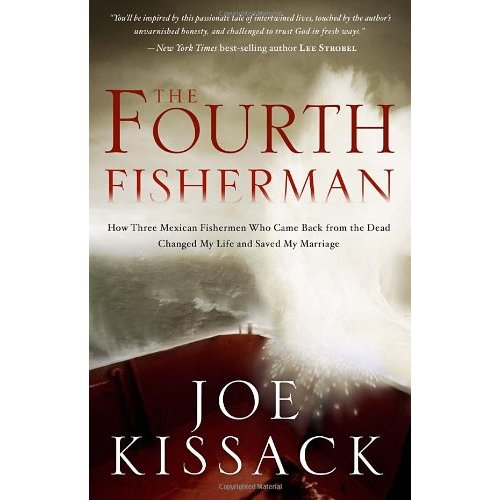
Ok, everyone and their brother is doing a book giveway so I figured I would jump on the bandwagon. I’ll be giving away a hardcover copy of The Fourth Fisherman by Joe Kissack (value $23.99) along with a print copy of my short Bible study The Word: Six Lessons from Psalm 119 (value $3.99). Entering is super easy, simply click on the “share” tab to share this post with your friends on facebook, twitter, google, or whatever! Then comment in the comments section “I shared!” I will select a winner on  Monday, November 26th.  NOTE: Your name will be entered for each time you shared this post. Whether that is through facebook, reblogging, or twitter, or whatever social media outlet you use. Make sure you comment “I shared” EACH time you share this post so I know how many times to enter your name in the drawing.

The Fourth Fisherman would make an excellent Christmas present as well, and The Word:Six Lessons from Psalm 119 would make an excellent stocking stuffer! So, you could win these books and keep them or “re-gift” them. Either way, I look forward to sending them off to the winner.


Men of Sunday: Book Review

It’s time for a confession. Despite being a woman, I have been an avid fan of the NFL since I was just a little girl. My dad never had boys so in a sense I became the boy he never had. We would sometimes play catch together and would always watch sports on the weekends, from basketball to baseball. But football was always my greatest sports obsession. Though I lived on the west coast I fell in love with my dad’s favorite east coast teams (where he was from) and to this day I loathe the San Francisco 49ers and love the Pittsburgh Steelers. So, when I saw Men of Sunday, I knew it was a book I needed to review. Anytime faith and football is combined, my interest is peaked, and I love learning about Christian athletes who outwardly testify their love for God.  My hopes were not disappointed.

Men of Sunday is written by Curtis Eichelberger, a sports writer for Bloomberg. It recounts a wide variety of personal faith testimonies from Christian NFL athletes like Aaron Rodgers, Ray Lewis and Trent Dilfer. The book deals with an assortment of every-day issues from raising kids to health crisis.

As a backseat football player (you know, calling plays from the couch) I’ve never felt as if I could relate to these guys who are often seen with beautiful women hanging on their arms and millions of dollars in the bank. It’s easy to think their fame and fortune gives them an easy ride in life, but Curtis dispels that myth in Men of Sunday. Whether Christian or not, NFL players deal with real life issues just like we do. They worry about job security, suffer personal losses, encounter temptation, and make poor choices with lasting consequences.

A few things really surprised me in the reading of this book. I expected it to be more of a biography about Christian guys playing football, but it was so much more. I found myself actually learning lessons from what these guys had to say. One of my favorite quotes was from Trent Dilfer (former NFL quarterback and current sports analyst for ESPN) during an interview about the loss of his five-year-old son (which was a candidly honest and emotional read):

“If the motivation for your faith is what’s going on in the seventy-five or ninety years we have here on earth, then you are missing the truth of God’s promises. What God promises is eternity. This is not our home.” (pg. 95)

And of course I loved reading the nuggets of wisdom from Ray Lewis, who I’ve enjoyed watching from the beginning of his career.

“To be a leader you’ve got to be willing to serve others. Learn your job and become excellent at it. Then seek to help others…what comes first? Servitude.” (pg. 203)

Overall I found Men of Sunday to be refreshing and encouraging. It was inspiring to learn what role Christianity plays amongst a large number of NFL athletes, and it also encouraged me to grow in my own spiritual life. Probably the biggest “aha” moment for me was learning about the heartaches and trials that go with fame and fortune and how much harder it really is to live a life devoted to Christ in such an environment. I can’t imagine what it would feel like to have my personal drama splattered all over newspapers and magazines, especially considering much of it probably would not be true.

Men of Sunday is a great book for the Christian NFL lover in your family. Even if you don’t watch football, you would be inspired by the stories of faith, perseverance, failure, loss, and redemption. The biblical truths are applicable to all walks of life. So, stop reading this review and go get your copy!

Men of Sunday was published by Thomas Nelson and released in August 2012. I believe in this book so much I am including a link to Amazon to purchase it (and no, I don’t get any money for that!) Click HERE to view on amazon.

(I received Men of Sunday by Curtis Eichelberger from Booksneeze for review purposes only. I was not required to give a positive review and the opinions here are strictly my own.)

The Worst Illness a Christian Could Get….

It’s one of the worst illnesses a Christian could get. Evidence of this cruel disease has popped up everywhere over the past several decades. No doubt, it has infected more believers now than ever before. Perhaps you have already contracted this disease without even knowing it. The symptoms are silent and deadly, spreading through thoughts and rationales. And how am I qualified to speak on such an illness? What gives me the right to draw attention to its ravages amongst the bride of Christ? Well, as the saying goes, “It takes one to know one.” I, too, have been infected with this deadly virus.

Where it all began…

Recently my husband, daughter, and I went to a favorite restaurant. We were quickly seated at the table where we proceeded to browse the tempting appetizers, entrees, and deserts colorfully displayed throughout the menu. Our mouths watered with anticipation. As the waitress approached I smiled as I usually do, getting ready to show my best Christian politeness while ordering. But the waitress kept on walking. She hadn’t even looked at me. A little disappointed I reasoned, “She probably has another table that was seated before us. No biggy.” But over the next fifteen minutes servers walked by our table, nary a one looking us in the eyes. My husband was irritated as my five-year-old grew increasingly hungry and restless.

“I think they’ve got ‘Somebody-Else Syndrome,’” I told my husband.

“What?” He asked looking confused.

“Every single one of them seems to think ‘somebody else’ will take care of us. And because they all have that mindset no one ends up helping.”

Eventually I went to the hostess at the front of the restaurant and explained our plight. It was still another five minutes before a server came to our table. As annoying as that situation was, God used it to speak to my heart.

So, what now?

I have no idea if any of those servers were Christians or not. It doesn’t really matter because the principle lies within the thought process. It goes something like this: the preacher brings attention to a need within the church and you nod, even pray about. “Lord, please meet this need. Please bring the right person along to help.”

Of course, there is nothing inherently wrong with such a prayer, but it fails to really address the issue. Whether consciously or not, it has an underlying tone of, “Lord, let someone else take care of this, because you know I can’t do it.” Obviously there are legitimate needs that cannot be met by every individual. I know when my pastor shows slides of the orphanage our church funds in India that I cannot fly there and personally get hands on. I understand these things. So, before you post an angry comment, this is not about giving people a guilt trip. As I said before, I too have prayed such prayers and thought such thoughts.

But what would happen if we prayed, “Lord, what can I do to meet this need?” You see, such a prayer puts the ball in our court, and that makes us uncomfortable. Because the reality is, in most circumstances there is something we can do.

Here are some of the excuses I have used to rationalize away any personal responsibility in helping others in a hands-on way.

“I don’t have enough money. God wants me to get out of debt first before I donate financially.”

In this day’s economy, I have a feeling I am not the only one who has used this excuse. It’s tantamount to saying I need to stay at home and study the entire Bible inside and out before I go in to the world and share my faith or serve in the church or surrounding community. It’s a clever ruse tempting to keep us in the stagnant waters of selfishness.

“I don’t have enough room, I don’t have enough resources. I don’t have enough time.”

Once again I refer to the above explanation. If we wait until we are “ready”, until we have enough, are enough, or own enough, then we will never—I repeat—never make a tangible move forward because we will never be “ready”. There will always be more bills to pay, more books to read, more personal “needs” to gain. I am convinced this is one of the single greatest deceptions among believers and it has immobilized the church. While some are willing to write checks, few are willing to get their own hands dirty. Like I said, I have been there too.

If all of us sitting in the pews on Sunday are infected with Somebody-Else Syndrome, the needs of our communities, even the needs of our brothers and sisters, will never be met. And what a shame that is. Indeed, I know many unbelievers who are far more generous with their time and resources than Christians. And this becomes a roadblock for them. After all, why should they believe in God when the people who say they follow God are so self-absorbed and inward focused?  If that is what God is all about, just judging, pointing fingers at sins, and not actually doing anything else, then what is the point?

Service not Serve-us…

A couple of weeks ago my pastor used this phrase, “service instead of serve-us”. How true is this, though? If we had a mindset of “what can I do, Lord” instead of, “Lord, let somebody else step up” more needs would be met.

If it sounds like I’m worked up, I am. I write this with high emotions as I watch a friend in need being turned away. Too many Christians infected with Somebody-Else Syndrome. Initially, when I heard of her need, I prayed, “Lord, please meet her need.” You know what He said? He said, “You can meet this need.”

He reminded me of a verse I had recently posted on facebook and twitter:

“I want you to share your food with the hungry and bring right into your own homes those who are helpless, poor, and destitute.” Is. 58:7

“But Lord, you know this type of situation has turned out badly in the past. You know our circumstances, finances…blah blah blah.” It was clear what God required. I was given an opportunity to practice what I preach, to get my hands dirty; to sacrifice comfort and resources. And I admit, I hesitated. But I am glad that after a few minutes of spiritual wrestling I submitted.

But here we are again. The same friend in the same situation and I am left wondering, “If this person was a missionary or speaker, or someone famous, the same people who say they cannot help would be willingly opening their doors.” Maybe that is too cynical, but it’s what I am left with after weeks of watching my friend struggle.

Once again I know what God requires of me, and I am willing now because I have seen the blessings and spiritual rewards for following His voice. But I am still reeling over the occurrences of Somebody-Else Syndrome that has infected many believers today.

Who is willing to sacrifice comfort, time, and resources to meet the needs around them? Who is willing to take a dose of God’s word, God’s truth, and eradicate this disease lurking within? Who is willing to serve Him by serving others instead of serving self? It’s time we rise up and get uncomfortable. Our brothers and sisters are hurting and are being rejected by their own spiritual families. This ought not be! It’s time we say “Lord, I want to share my food with the hungry and bring right into my own homes those who are helpless, poor, and destitute.”

Tarrying with “Terah”

Tarrying with “Terah”

God commanded Abram to pack his bags and take a hike—ok, not exactly in those words (see Genesis 12). Actually, God commanded Abram to leave everything familiar, the land he had probably known most of his life (Ur of Chaldees), and move to a place “that I will show thee”. I mean, God was not being terribly specific here.

But we all know good ole Abram, he was such a righteous man, surely he saddled up and moved on at the first command, right? Well, uh, not exactly. Just a few verses back in Genesis 11 we find that Abram had his own ideas. Instead of dropping everything to follow God into this “unknown” land, he did travel in the direction of Canaan (the unspecified land) but decided to tarry a while in Haran. Not only that, but he took his father, Terah, with him. This was also in direct disobedience to God’s command, which was, “Get thee out of thy country, and from thy kindred, and from thy father’s house.”

I can’t really blame Abram, though. I wouldn’t want to leave my family behind to go on some mystical journey to unknown lands. I probably would have stalled a bit. But the story gets better, folks; Abram’s father’s name was Terah. You know what Terah means? It means “delay”. Maybe Terah was two weeks past his due date when his mother finally gave birth to him? We can’t know for sure why she chose such a name for Terah, but later in the life of Abram it makes too much sense to ignore. Abram was delayed by his elderly father; the same man who was himself named delay.

Eventually Abram got his act together and finished his journey, but only after his father died. “And Abram took Sarai his wife, and Lot his brother’s son, and all their substance that they had gathered, and the souls that they had gotten in Haran, and they went forth to go into the land of Canaan.” Evidently Abram was in Haran quite some time since he obviously had a lot to gather before he left. Nevertheless, he finally did obey.

I can’t help but wonder how many times I have tarried in Haran, with my Terah in tow. How many excuses have I come up with to delay what God has clearly spoken? And once I did finally listen, how many blessings were waiting for me in the land of Canaan? In the end I have found the only thing tarrying with Terah has ever accomplished was to delay God’s greater blessing and purpose in my life.

How about you? Have you been tarrying with Terah? Have you gotten distracted by the sights and sounds of Haran when a greater blessing has awaited you in Canaan? Is it time for you to leave your Ur and head to a land “that [God] will show thee”?