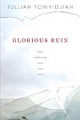
Glorious Ruin: How Suffering Sets You Free by Tullian Tchividjian

No one is exempt from suffering, whether physically, emotionally, or relationally. It matters not if a person is a Christian—everyone experiences suffering to some degree. No doubt suffering has been written about, studied, debated, and discussed for generations. Over time one may begin to wonder if there can possibly be anything new to say about it.  But Glorious Ruin: How Suffering Sets You Free by Tullian Tchividjian does exactly that. This may be one of the most important books a Christian could read in today’s publishing market. My view on suffering was challenged throughout this book, and by the end of it, I found myself deeply affected in a spiritually transforming way.

Glorious Ruin discusses at length two key issues: The Theology of Glory and the Theology of the Cross. Throughout the text Tchividjian explains the origins of both, as well as key differences between the two.

Glorious Ruin is brimming with powerful truth which provokes pause and careful contemplation in the reader. With brutal honesty, the belief system of the majority of modern Christians is challenged to go well beyond what is generally understood about suffering. Tchividjian also challenges the ideologies permeating from the Prosperity Gospel, Scientism, and Nihilism as well as skillfully working through the New Age “self-transformation” movement. He exposes the fallacy of Karma, and how most every Christian is tainted with the idea that “what goes around comes around”–whether they realize it or not.

“We communicate that God exists for our benefit, happiness, self-fulfillment, and personal transformation. Those aren’t necessarily bad things, and God isn’t necessarily opposed to them, but God in Christ cannot be reduced to a means to our selfish ends. He is the end Himself!” (pg. 47)

Christ cannot be reduced to a means to our selfish ends. He is the end Himself! <<<< Click to Tweet!

A tremendous amount of detail goes into studying the effects of moralizing and minimalizing suffering, namely within the Church community. We may think we are not guilty of such attitudes, but this book challenges thinking and promotes deep introspection on such issues. If we’re honest, we’ll admit we are at least tempted to rationalize suffering, or explain it, using the word of God. We tend to, at least subconsciously, feel the need to defend God’s allowance of certain tragedies. Glorious Ruin is not another book to offer reasons why a person suffers, it simply points to the Gospel repeatedly as not needing a defense or an explanation.

“The Gospel is not ultimately a defense from pain and suffering; rather, it is the message of God’s rescue through pain.” (pg. 38)

Unlike many Christian resources currently available, it’s clear Glorious Ruin was not written to promote a certain doctrine or theology, but focuses solely on the Gospel as it is written in the Bible, especially through the life and words of Jesus.

“What God pressed deeply into me is that there is no true, lasting hope outside of Him. Specifically, there is no true, lasting hope outside of the death and resurrection of Jesus Christ. I’m not talking about an explanation of what happened on Calvary—I’m talking about Calvary itself.” (pg. 150)

Perhaps one of the most poignant messages of the entire book deals with our inherent need to have things explained. Our natural tendencies are predisposed to asking the Why and How of our circumstances. The following quote hit home for me, personally.

“Explanations…are a substitute for trust, a red herring at best. God is interested in something much more powerful than anything information could ever produce. He is interested in faith.” (pg. 152)

I like to keep my personal “opinions” out of book reviews, keeping to the factual content of the book and letting the reader decide if its right for them, but this case proved impossible for me. I cannot withhold the deep impact this book had on my life and how the truth it contains applies to every living soul on the planet. If you think you know everything about suffering already, I plead with you to read this book. If you live a comfortable life, relatively free of what you consider suffering, I plead with you to read this book anyways—if not for yourself, for the people who walk in to your life who have suffered in ways you may not be able to relate to.

One thing you will not find in Glorious Ruin is an attempt to trivialize pain, or compare one person’s experience to another. Tchividjian rightly acknowledges that we all suffer in unique ways and God has a plan to set us free through that suffering, no matter what its form. Simply put, Glorious Ruin is a must-read Christian resource.

Glorious Ruin: How Suffering Sets You Free by Tullian Tchividjian is published through David C. Cook and is scheduled to be released on October 1, 2012.

(I received this book for review purposes only and was not required to give a positive review.)

Tullian Tchividjian is the Senior Pastor at Coral Ridge Presbyterian Church in Ft. Lauderdale, Florida. He is also the grandson of Billy and Ruth Graham. Tchividjian is a visiting professor of theology at Reformed Theological Seminary and has authored many books including Jesus + Nothing = Everything.

A Little Inspiration from Isaiah

“Don’t fear anything except the Lord of the armies of Heaven! If you

fear Him, you need fear nothing else.”

Isaiah 8:13


“See, God has come to save me! I will trust and not be afraid, for the

Lord is my strength and song; He is my salvation. Oh the JOY of

drinking deeply from the Fountain of Salvation!”

Isaiah 12:2-3

“But the Lord of Hosts is exalted above all, for He alone is holy, just,

and good.”

Isaiah 5:16

Golden Goggles

What a difference perspective makes.

One Olympian is devastated to receive a silver medal while another makes history with a bronze. One Olympian rejoices like the greatest victor making it to third place while another Olympian totes a sour demeanor as a second place finalist.

Throughout the Olympics I’ve noticed a recurring theme transcending every event. There are athletes only happy with a gold medal, and there are athletes who would be happy with any medal at all. There are countries who have never received medals in certain events and others who are expected to receive gold in every event. For me, the layperson at home, I marvel at the attitudes of some receiving silver or bronze medals. One athlete even sobbed uncontrollably at their disappointment receiving a silver medal.

If there was an event for coffee drinking I might have a chance at Olympic gold, otherwise my days will be spent in the mediocrity of mundane every-day living while the “real” champs make millions in endorsements.  I’d like to think if I was talented in a given sport, was honored enough to make it to the biggest forum the world has ever known, and took away a silver or bronze medal-beating dozens of other world-class athletes-that I’d be thrilled beyond comprehension. I’ve seen that response in a few athletes, but the overwhelming take-away from many post-event interviews is that anything less than gold is trash.

And what does this message teach? If you work hard, sacrifice much and come in second place you’re a worthless piece of garbage? What a shame. I’ve seen interviews where athletes are practically defending their silver/bronze medals to a broadcaster determined to squeeze out a dramatic interview. “Oh, you must be so disappointed you didn’t get gold.” One athlete responded to this statement (loosely paraphrased)”I’m at the Olympics and I’m on the medal stand-I think that’s good enough.” Bravo.

And how often does this type of thinking play out in every-day life? We have big goals, big dreams, and great ambitions-and then we fall short. We feel there is only one outcome that will work, and when that outcome isn’t realized we are sobbing in second place. Our golden-goggles blur our vision of greatness.

Could it be that maybe, just maybe, our less-than-grandeur finish was what God had planned for us all along? That perhaps our un-notoriety was the greatness God destined us for? Isn’t His plan the best plan, and His outcome the best result?

There’s nothing wrong with high aspirations, but we must remember our plans are not always His plans. When we’ve done our best and come up short of what we expected, we have to trust His purposes. That place of trust is the only place that soothes lost dreams and dashed hopes.

“Commit your actions to the Lord and your plans will succeed.” Proverbs 16:3

If I commit every action to the glory of God, the outcome will be a success in God’s eyes, though not necessarily in man’s eyes. I want to wear the golden goggles of God’s success. I want to be okay with His outcome. I want to have His perspective.  What color goggles do you have on today?

“We can make our own plans, but the Lord gives the right answer. People may be pure in their own eyes, but the Lord examines their motives. Commit your actions to the Lord, and your plans will succeed.” Proverbs 16:1-3

Nourishing Pathways

**Published in The Christian Online Magazine August 2012 Issue**

Nourishing Pathways to Health (part 1)

13 years ago I met Rebecca. Besides sharing the same first two names (Rebecca Anne) we found we had a mutual love for Jesus. Rebecca has been a blessing in my life, though we walked different paths for many years, we have come together once again bonded not only by our love for Jesus, but our desire to glorify God with our bodies.

Rebecca is now married and has three beautiful kids. Her husband, Luke, is the music and youth pastor at Hillsdale Blvd Baptist church while Rebecca teaches Sunday school for the youth. Together they serve God passionately, seeking to honor Him with their bodies while teaching those habits to their children. I know you’ll be encouraged by her story.

Nourishing Pathways to Health

Chemical additives are common and convenience is praised in the modern diet, but Sacramento California resident Rebecca Gertner has chosen a different path for her family’s health, especially her husband who, at the age of 32, was diagnosed with stage-4 lung cancer.

“When God’s word says that our bodies are His temple, that means we should honor them. Just like we wouldn’t go spread trash all over our church sanctuary or purposely destroy the building, we should be mindful of how we are treating this flesh and blood sanctuary.”

Rebecca hasn’t always practiced a healthy lifestyle. As a member of the Finley Family, who travelled and performed as a way of life, she learned the art of eating on the go. Rebecca recalled her life on the bus:

“Growing up I ate a lot of fast food and drank a lot of soda pop. For years we didn’t have a refrigerator and just an ice chest. That left us consuming a lot of things that were either non-perishable or quick to purchase or eat.”

When the Finley Family wasn’t touring they worked together at home booking concerts, practicing music, and making bus repairs. Eventually a system was developed to trade off cooking responsibilities for the family so everyone would have a turn preparing food. Making meals for a large family with varying tastes often meant preparing fried foods, drinking sodas, and baking hefty desserts.

“I was unhealthy when I got married,” Rebecca admitted, “I had food allergies that caused me to have migraines regularly, but since my family wasn’t thinking much about the quality of our diet, it never occurred to me that the headaches were a result of what I was eating. Eventually I was able to maintain a headache free life just by the choices I made concerning food.”

Rebecca’s husband, Luke, had learned about nutrition when his brother became sick as a young boy. Unable to find healing through traditional means, his mother turned to nutrition. His family then adopted and maintained a healthy lifestyle.

“Getting married to Luke changed the way I saw food. Not only did I have the freedom to cook what I wanted, but I also had someone encouraging me to cook healthy foods,” Rebecca explained.

“The biggest factor in deciding to change the way we ate was when my husband was diagnosed with stage 4 non-smokers lung cancer. As you can imagine we were shocked, scared and motivated to do whatever it took to beat this cancer. Food seems to take a back-burner when you’re looking at the statistics of this kind of cancer. Life is more than food. Food is simply what makes life possible.”

Rebecca spent countless hours in research via the internet as well as seeking advice from medical professionals. After learning how excessive amounts of sugar and carbs can suppress the immune system, Rebecca and Luke decided to limit Luke’s carb intake and focus on whole foods instead of processed refined foods, limiting the amount of added sugar to his diet and giving him the best opportunity to heal through proper nutrition as well as traditional cancer treatments. She admits it’s often difficult to discern what advice to take and what to discard, considering there were hundreds of contradictory medical opinions. Ultimately it came down to seeking God’s will and wisdom in every health choice.

You can read the rest of Rebecca’s interview in September’s issue of The Christian Online Magazine! Stay tuned!

Divine Recipes

Suggested Reading: 2 Timothy 3:14-17

“All Scripture is…useful.” (2 Tim. 3:16)

The Bible is meant to be understood and followed as a whole, not solely in scattered parts. Look at Romans 8:28, the part about everything working out for my good is very pleasing to my taste-buds but what about verses 18-27? There I find content concerning suffering, future glory, weaknesses, and my great Intercessor. One verse is great, but consumed as a whole, it takes on new life, new meaning, and affects my heart the way it was intended.

I’ve discovered many books have provided unique applications when I understand the author, the audience, and the culture. All of these facts help paint a picture of the circumstances the passages were written under and enhance their purpose.

Can I take and eat a bell pepper?

Sure I can. In fact, I think they’re pretty tasty in their raw form.

But if I take the same pepper, follow the recipe,

 understand the other ingredients

 and use them as directed,

I create a masterpiece of delight for my taste-buds.


This not only pleases me, but those around me benefit.

The Bible is my recipe book for life. Each ingredient (verse) tastes good on its own and serves a purpose to my spiritual health, but when I choose to take the time to understand the entire recipe, how it fits together, what its completed picture looks like, and how to get there, the individual ingredients take on new life.

As I follow the recipe I get a result very similar to the original intent: a life manifesting the characteristics of Jesus, living under the influence of the Holy Spirit.

Is the completed picture a perfect resemblance of the original?

No, it can’t be perfect, but it can be close!

One day the Master Chef will create in me that perfect glorified manifestation of his recipe book, and then I will look, feel, and taste exactly how I was meant to. Until then, I can follow the recipe as it was designed, as a whole, and resemble a likeness very similar to the One who created it.

Why We Do What We Do…Part II: Overspending

“Each of you should use whatever gifts you have received to serve others, as faithful stewards of God’s grace in its various forms.” 1 Peter 4:10

Does God really care if I buy an extra pair of shoes, a movie, some video games, or that magazine? Doesn’t God have bigger problems then how I spend my money? Isn’t that a bit extreme? After reading Luke 12:35-48 (I’d highly recommend checking it out) I’m convinced it is not too extreme and everything we do is important. Our Master is returning and we’re busy goofing off. He has entrusted us with material and spiritual gifts and He is watching us right now to see if we are using them faithfully. It bears no significance that our name is on the paycheck; it all belongs to Him. (1 Cor. 10:26) Consider this; Jesus is standing in front of you with a wad of cash, assuring you can do whatever you want with it. I don’t know about you, but my first response probably wouldn’t be running to Outback Steakhouse, buying a new T.V., or taking a trip to Disneyland. I’m guessing I would be motivated and obligated to use it for the hungry and needy. I couldn’t say for sure that’s what I’d do, but I have my dreams.

The reality is, every Friday (or whatever the pay day is), we are presented with that very same opportunity! Yes, we have bills to pay and things we need for our survival, but how much of that is truly spent wisely? If Jesus looked through your checkbook register, would you be embarassed? I know I would be. Let’s spend a moment clearing out our spiritual garden again, digging up the roots to our spending habits.

Root #1: I Lust with My Eyes

“For everything in the world-the lust of the flesh, the lust of the eyes, and the pride of life-comes not from the Father but from the world.” 1 John 2:16

It’s impossible to make an unwise purchase without the sin of lust being involved. We didn’t buy that 80″ big screen television because we had no choice. We saw it with our eyes, we wanted it, we lusted after it, so we bought it! If we want to be good stewards of our finances, we must rectify our eyes of lust, and ask God to give us new eyes; kingdom eyes. Does that mean buying items for entertainment is sin? Only you and God know what is sin for you and your finances (James 4:17 again). If He has convicted you of a certain spending issue, and you ignore it, you are sinning. What’s a sin for me may not be a sin for you; it is up to me and you to listen to the Holy Spirit’s conviction and obey. Maybe you could try praying before making such a purchase, and see what God has to say.

Root #2: I am Discontent

“The fear of the Lord leads to life: Then one rests content.” Proverbs 19:23 (Emphasis mine)

A spirit of discontentment will most assuredly lead to over-spending. If we  found our contenment in God, we would be less tempted to buy junk we don’t really need. Jesus warns us, “Life does not consist in an abundance of possessions.” (Luke 12:15) Paul instructs us to be content in godliness, rather than accumulation of things. (1 Tim. 6:6) We need to ask ourselves: are we content with what we have or are we constantly looking to have more? (1 Tim. 6:8)

Root #3: I am an Idolator

“Don’t be greedy, for a greedy person is an idolator, worshiping the things of this world.” Colossians 3:5 (NLT)

“Greed causes fighting; trusting in the Lord leads to prosperity.” Proverbs 28:25

Ouch! All I have to do is be greedy (selfish) and I am labeled as an idolator! How many times throughout a given day am I more concerned with my rights then the rights of those around me? Selfish ambition is greed. The deep desire for self leads us into all sorts of ugliness, one of which is over-spending. I want what I want and I want it now! I have the money, so why not? Once again we need to consider the source of our desire. Are we making wise choices or selfish choices? I have a friend who almost never makes new purchases for her children. She always uses hand-me-downs from families and friends yet her kids have some pretty cool toys. Many of them were used and they work just as well. We may look at used things as being beneath us or not good enough for us; this is another source of pride, selfishness, and greed. Once again I implore you to seek God’s counsel before making any purchase.

If you’re looking to increase the kingdom of God, and use your finances to glorify Him, consider the above roots and whether they have held a place in your spiritual garden. Seek new ways to be a blessing to someone else, rather then feeding your own desires. One of the best ways to get kingdom focused is to focus on the needs of those around you,  keeping in mind the nice things you have are not going to eternity with you.

(For more information on frugality, see America’s Cheapest Family Gets You Right On The Money or Cut Your Grocery Bill in Half with America’s Cheapest Family by Steve and Annette Economides: America’s Cheapest Family. You can also see their bio and info on facebook.)

Recognizing the Causes of Over-Indulgence

**Published in The Christian Online Magazine June issue**

Column: Temple Maintenance by Rebecca Aarup

Recognizing the Causes of Over-Indulgence

Anyone who has had any experience with lawn maintenance or gardening knows how obnoxious ugly weeds can be. One way or another they have to be dealt with; weed poison or elbow grease. The same is true for believers. We want to be changed instantly; read a verse and do what it says without effort. Unfortunately, it’s not that easy; there is work required. God has made us His gardens of fruit bearing, yet we sometimes lose our crops to weeds. Here are some ways you can recognize a weed problem in your own garden.

Weed #1: It’s my body so I can eat however much I want, whenever I want.

The Bible is emphatic on how we should view this lie. Paul tells us, “You are not your own; you were bought at a price.” (1 Cor. 6:19-20) Once you recognize your need to self-gratify is directly contradicted to the word of God you can repent of your belief and begin to live as one who knows their worth in God’s eyes.

Weed #2: God doesn’t care about what I eat.

Get ready to grab your weed poison and spray it: “Do not join those…who gorge themselves on meat, for… gluttons become poor, and drowsiness clothes them in rage.” (Prov. 23:20-21) I’m fairly certain that God does care about what we eat, and how much, otherwise he wouldn’t have chosen to warn us about the consequences. Our loving Father does not wish that we would suffer out of our own ignorance, so He gives us helpful guidelines in His word.

Weed #3: Food makes me happy/Food is a pleasurable reward.

Get your shovel because Jesus tells us all about how to be satisfied and it has nothing to do with food. “Man does not live on bread alone, but on every word that comes from the mouth of God.” (Matt. 4:4)

If our joy is coming from the Fountain of Living Water, why do we need a counterfeit as silly as food? When we recognize our value as God’s beloved children, we have perfect peace that sets us free to eat in moderation and not use rewards as an excuse to over-indulge.

Weed #4: I’ll start a diet when I have more time, I’m just too busy. (Procrastination)

Our friend James has some words about that. “Now listen you who say, ‘Today or tomorrow we will go to this or that city’…Why, you do not even know what will happen tomorrow. What is your life? You are a mist that appears for a little while and then vanishes. Anyone, then, who knows the good he ought to do and doesn’t do it, sins.” (Jms. 4:13-14, 17) When we know what to do and still refuse to do it we chose to ignore (grieve) the Holy Spirit.

Weed #5: The only way I can be healthy is to eliminate certain foods and buy health food that I can’t afford.*

“Everything is permissible for me, but not everything is beneficial. Everything is permissible for me, but I will not be mastered by anything.” (1 Cor. 6:12)

Whether or not you feel convicted to avoid certain foods is between you and God. Let the Holy Spirit do His job and refuse to do it for Him. If you have experienced positive results from giving up something, by all means share it in a loving manner, but never assume it’s God’s will for
everyone.  Ask the Holy Spirit to give you discernment over your food choices. Common sense will usually reveal what is “beneficial” for our God given temples, and what we should do without.

Be assured you can eradicate weeds and grow healthy crops of self-control once again. Confess to the Lord your short-comings and receive His forgiveness. Obedience will clear your conscience before God and allow you to experience freedom from the guilt over-indulgence can bring. You’ll also be freed from diets once and for all!

*This is not meant to include people with food allergies or medical issues that require them to abstain from certain foods. Eating foods out of medical necessity is an entirely different issue this article does not intend to address.

(For an in-depth study of Biblical weight loss, see Thin Within: A Grace Oriented Approach to Lasting Weight Loss by Judy Halliday, R.N. and Arthur Halliday, M.D.)

A Mother’s Joy

“May she who gave birth to you be happy!” Proverbs 23:25b

Suggested Reading: Proverbs 23:22-25

The Holy Spirit tugs at my heart and I am reminded that my parents are my parents forever, and they’re the only ones I’ll ever have. Life is short, and I still have a responsibility to them. This obligation goes way beyond physical needs being met, or nursing home bills being paid. I’m talking about the emotional state of my parents.

As Mother day draws near I am prodded to look deep within and how I am contributing to the joy of my mother. I can’t always give her what she wants or needs materially, but according to God’s word, my godliness (or lack thereof) has an effect on my mother’s inner joy. That’s a lot of pressure! I’m starting to understand what that looks like, though. Godliness isn’t just about “doing”, it’s about “being” all God has designed me to be, from the inside out. Seeing with God’s eyes allows me to appreciate how He feels about my mom, and how she deserves to be treated, regardless of past hurts.

The Master Creator formed my mother in the womb (Psalm 139) and created her for a specific purpose; He loves her and went to the cross for her. It is my honor as her child to replicate the love of Christ over her. There is no mention in Proverbs of how I was raised, what was said, or how I was treated; it simply has nothing to do with how I am to love my mother (or father). How I love my Mom (not the feeling love, but the active love), and anyone else for that matter, is only contingent on the value I see. If I see her through the eyes of my Heavenly Father, then I will be motivated to love, honor, care for, listen to, and encourage her with the love of Jesus.

I looked hard to find the perfect gift for mom this year, not because she needed it, but because I wanted her to understand my love for her through the giving of a special “thing”.  But Mother’s Day isn’t about breakfast in bed, pretty flowers, or new appliances; it’s about reflecting the love of Jesus to my mom every day of the year, and choosing to love her as God does, without expectation.

My mom, Sue, dressed up for an old west re-enactment.


The Junk in My Trunk

“Produce fruit in keeping with repentance.” Matthew 3:8

Suggested reading: Isaiah 59

Waking the Dead by John Eldredge

Imagine you’ve beautifully decorated a cake. You spent years studying how to decorate it to perfection, and all that knowledge has paid off. Your cake looks marvelous, anyone would want it at their wedding. That is unless they cut into it. You see, you spent so much time learning how to decorate the cake, you never took the time to learn how to bake the cake! Your ingredients were not measured correctly, and were not good quality. You had a beautiful cake that was inedible.

This describes the majority of us. We’ve accepted the teachings that we “should” act a certain way. So, we attempt to decorate our appearance (with the best of intentions) rather than fixing the inside. It’s called legalism. “Surely a real Christian wouldn’t act that way!” Perhaps that “Christian” has too much junk in their trunk, and they don’t realize it.

I have spent many years learning the Bible, doing studies, and attending classes, but those facts did not set me free. As a believer I continued to struggle with eating disorders, addictions, and ungodly attitudes. It was a daily struggle which often ended in despair. “I’ll never be able to do this!” There are many denominations that would label me a “non-believer” based on my actions. What was my problem?

When I went through The Steps to Freedom in Christ I started to understand what was holding me up. Yes, I did have a heart that sought after God, but I had too much junk in my trunk making it impossible for me to drive up the mountaintop of freedom. I struggled every day with wanting to do the right thing, then failing to do it. I chalked it up to Paul’s struggle in Romans 7:24, “Oh wretched man that I am!” I guess it’s the way it will always be; trying to do good and failing. I was taught and believed this was the way of the Christian life, ups and downs; failures and successes.

I had tried to forget about my past and move on for many years, yet I had failed to deal with it head on. One thing I did was list every physical act partaken of with another man that was not my husband. I had to write down their names and what I did. I even had to write down my husband’s name and everything we did before we were married. I went through the list systematically renouncing the deeds and the spiritual bonds it produced. Those were things I tried to forget for many years. I never realized that just pushing the memories away didn’t fix the problem. I had made spiritual agreements with these people and these bonds needed to be broken. Just because I had re-dedicated myself to Jesus didn’t mean the spiritual bonds of sin were severed. Had God already forgiven me? Of course! He forgave me as He suffered on the cross for my every shameful choice, but I couldn’t experience freedom until I acknowledged and renounced my actions.

Repentance isn’t for God, it’s for me.

This process was repeated in every area of my life, not just sexual sin. I’m talking about down to “obeying the laws of the government”. Yes, that means speeding and other traffic violations whether or not I was “caught”. Does this sound extreme to you? I assure you, it’s not. A lifetime of junk piling up set a wall between me and true freedom.

I am living life on the mountaintop now because I finally emptied out the garbage. I acknowledged its existence, renounced it and repented, allowing me to experience the freedom of Christ completely. We’re wearing ourselves out trying to get up that mountain with 500lbs of bricks on our backs. We’re fighting a losing battle by decorating a cake with inedible ingredients.

For the first time in my life I am “living” the way I should; not out of effort but because I have been changed from the inside out.  If my trunk is filled with junk I’ve never faced, I will have no room to retain the truth of Jesus that results in changed behavior.

Am I perfect? No, but I am equipped, armed, and ready for the spiritual battle that rages every day of my life and that has allowed me to walk in my position with Christ as a saint.